Pick-and-place Robot Arm
Pick-and-place Robot Arm
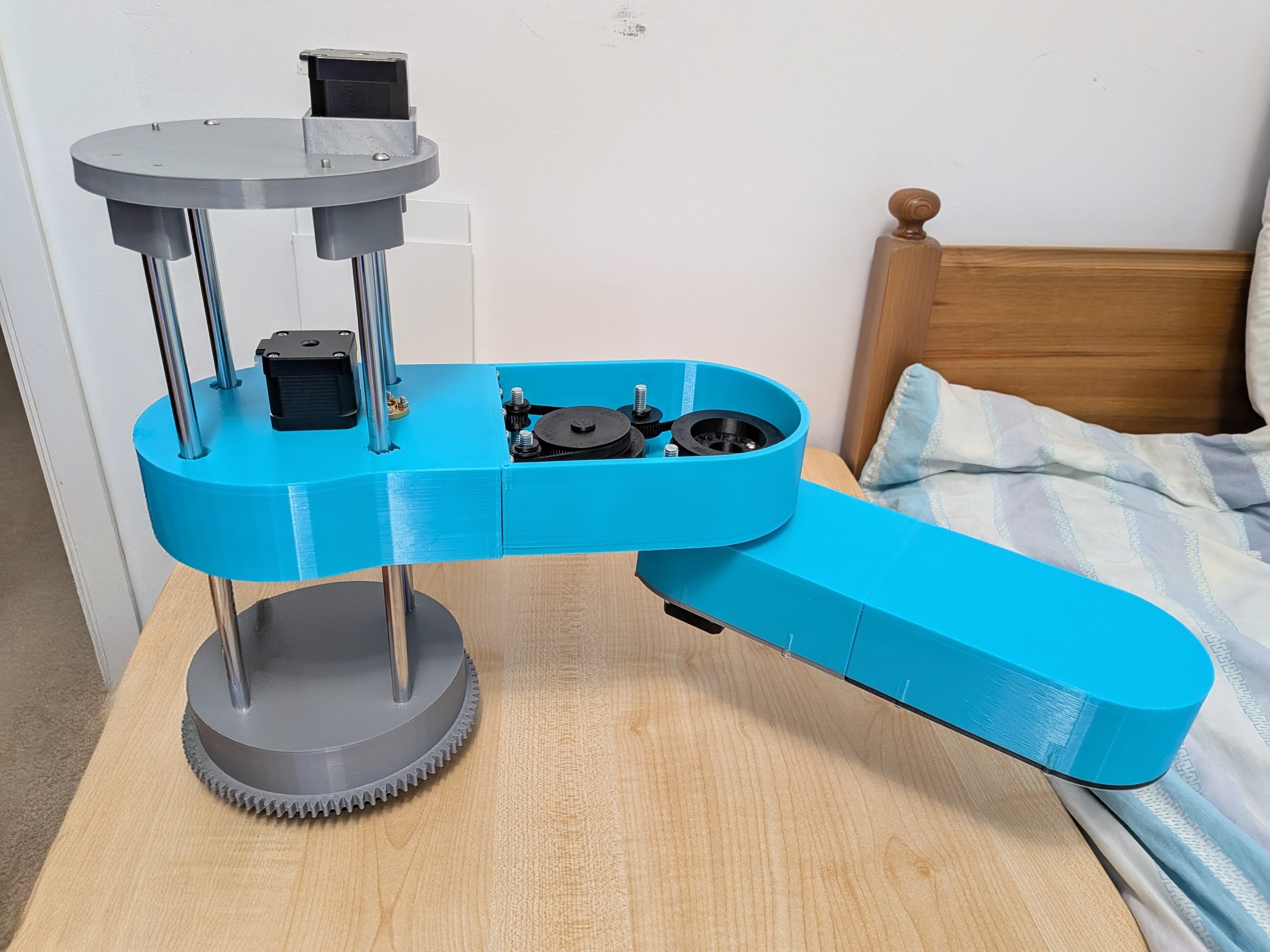
This project showcases a SCARA robot arm that I designed, modeled, and built to apply my mechatronics coursework to a hands-on system. The project began as a personal challenge to bridge the gap between theoretical problem-solving and real-world engineering. I made this project to present at the Treehouse node of Socratica at their showcase event on October 8th, 2025. Here, I presented my project in front of 100+ people.
Background
My interest in robotics started in high school when I joined a VEX Robotics team. I competed at the World Championship level for two of the three years I participated, where I learned design, programming, and mechanical systems through direct experience. That foundation led me to study Mechatronic Systems Engineering at Simon Fraser University, where I continued developing practical robotics skills. Most of my experience at this time is the first two years of an engineering degree + one co-op term. The skills I built were mainly solving textbook practice problems and writing lab reports. Doing this project allowed me to expand on what I have learned and practice integrating electronics with my mechanical designs.
Design and Development
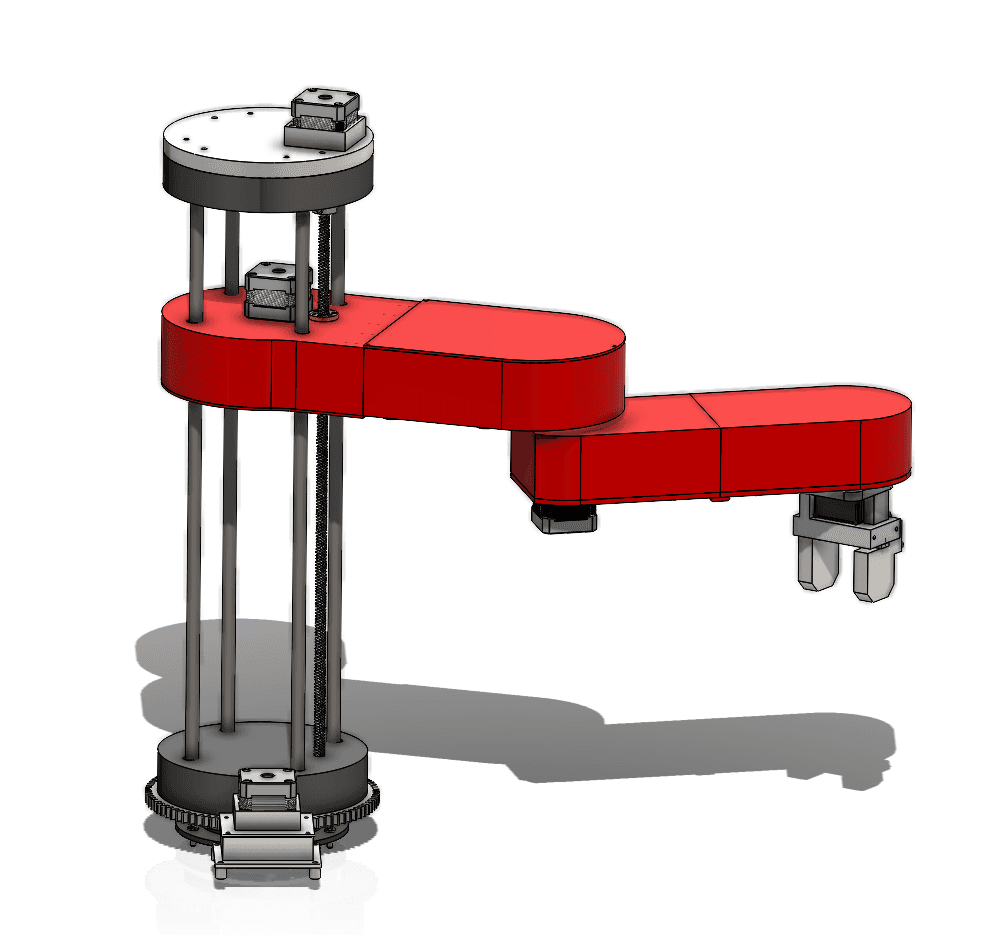
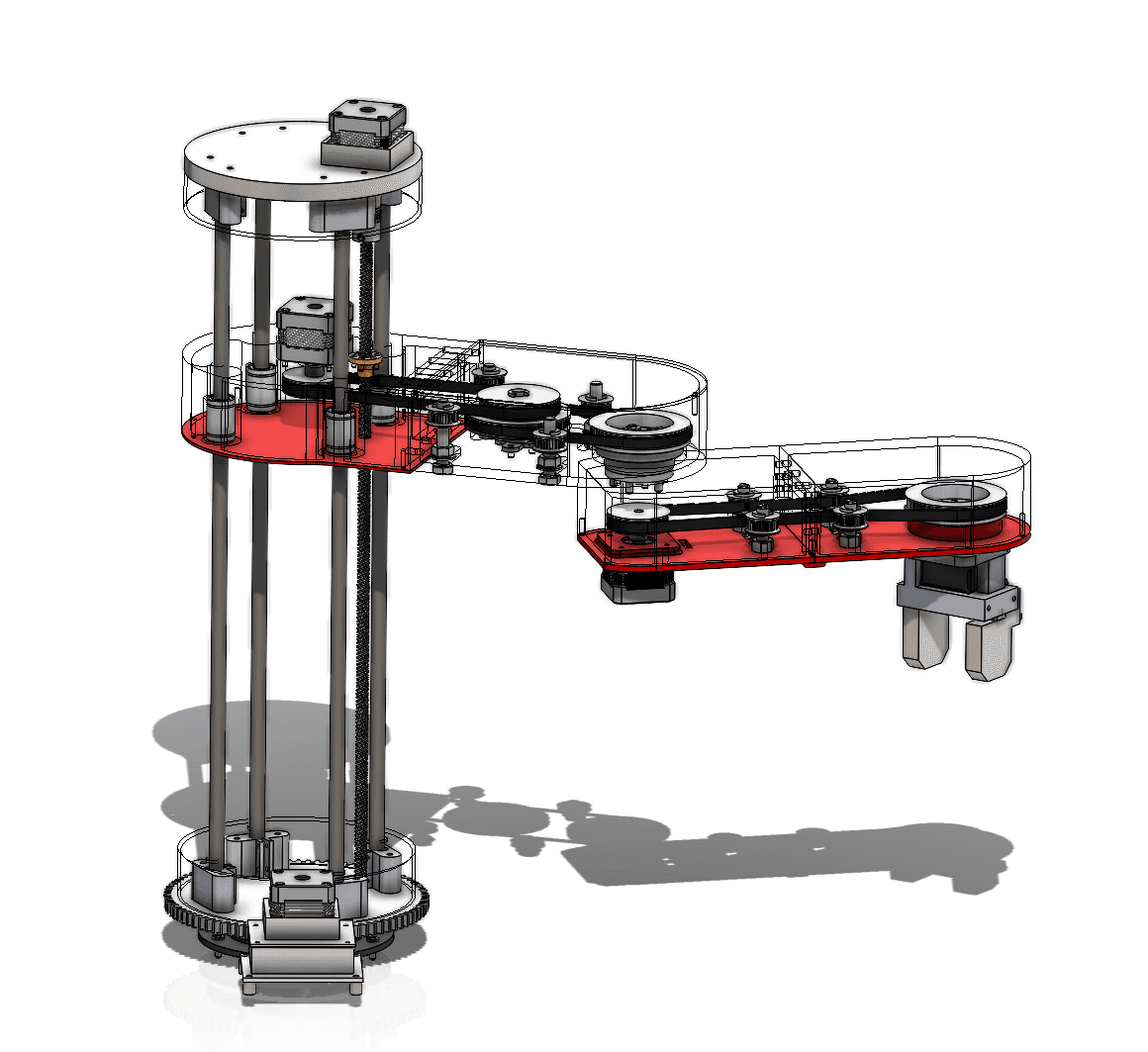
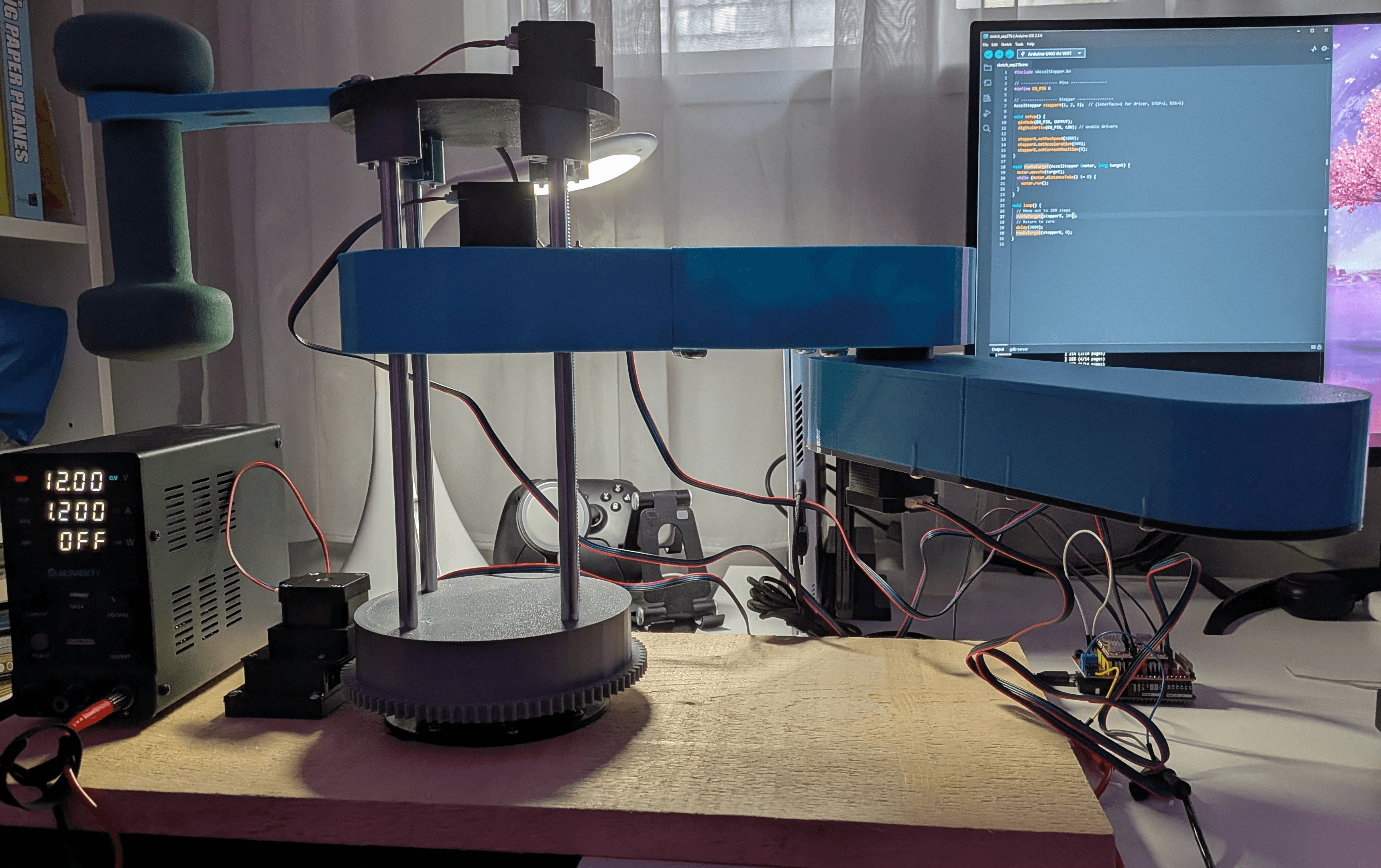
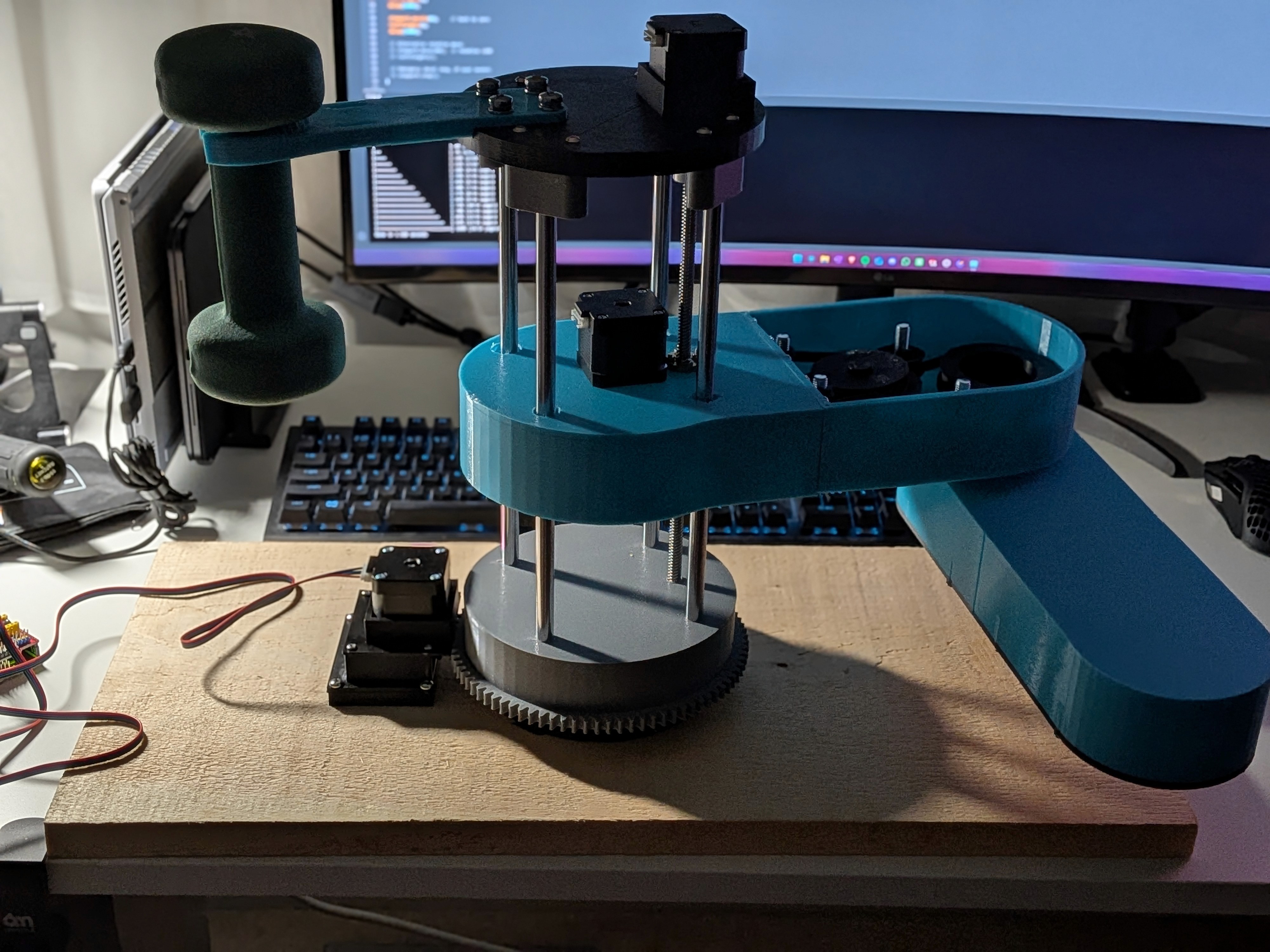
The robot arm is modeled after a pick-and-place mechanism, commonly used in manufacturing for lifting and transporting objects over. The system includes:
A base driven by a stepper motor, geared for torque
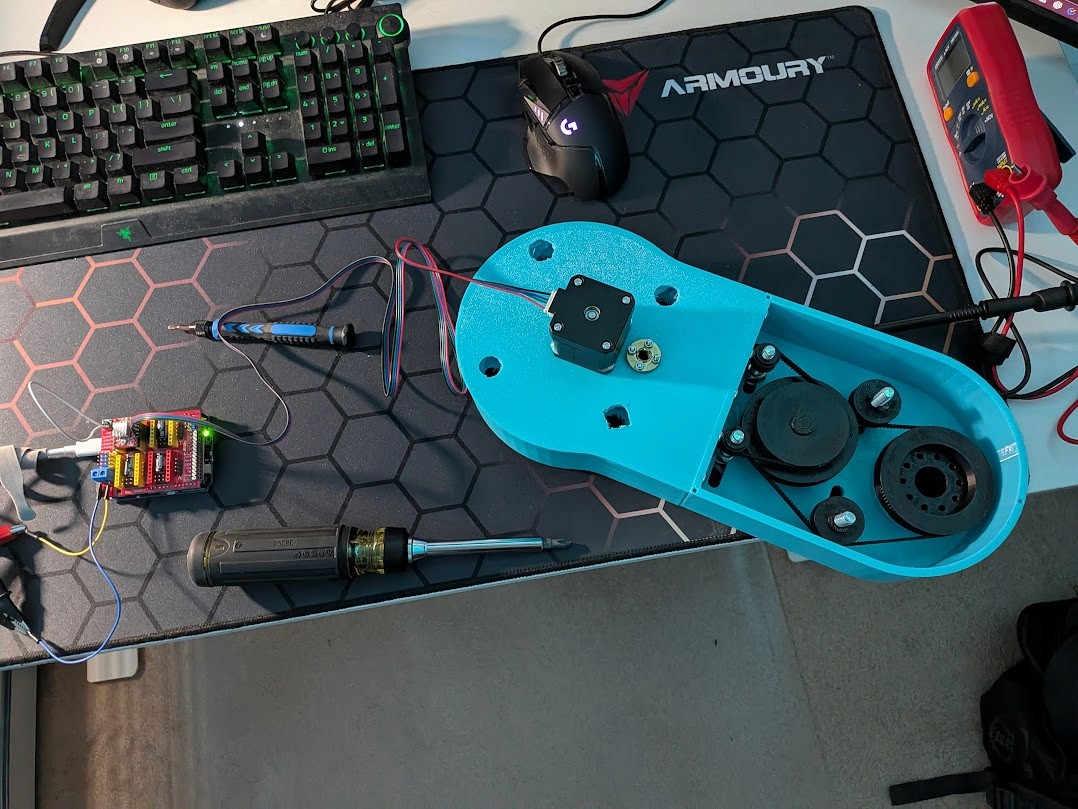
Two linked arms of equal length for horizontal reach. One arm powered by a stepper motor + belt assembly for the forearm, and the other moves with the base of the robot.
Vertical lift mechanism driven by a lead screw connected to a stepper motor.
Mount for a gripper, to be added in the next iteration, powered by a servo motor.
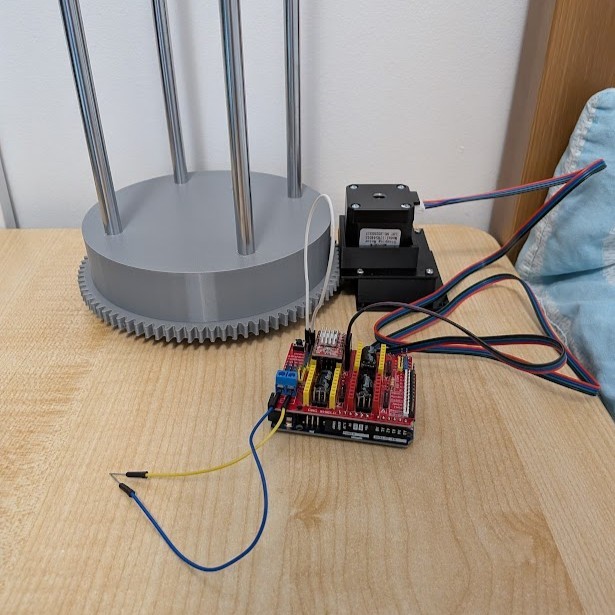
I designed all parts in SolidWorks, starting from the base and progressing to the arm assemblies and gripper mount. Once the CAD work was complete, I fabricated each component using a 3D printer, assembled the mechanical structure, and integrated the electronics for motor control.
Features and Functionality
The robot operates through hard-coded motion sequences that control:
Rotation at the base
Vertical lifting
Forearm extension and retraction
The system is powered by an external supply and includes a counterweight near the top for stability. Future upgrades include adding a functional gripper and implementing motion control through inverse kinematics for smoother, more intelligent movement.
Reflection
This robot arm represents my approach to engineering: combining creativity, discipline, and technical knowledge to build tangible systems. It reflects my long-term passion for robotics and my goal to continue developing projects that merge mechanical design, electronics, and control systems.
This project showcases a SCARA robot arm that I designed, modeled, and built to apply my mechatronics coursework to a hands-on system. The project began as a personal challenge to bridge the gap between theoretical problem-solving and real-world engineering. I made this project to present at the Treehouse node of Socratica at their showcase event on October 8th, 2025. Here, I presented my project in front of 100+ people.
Background
My interest in robotics started in high school when I joined a VEX Robotics team. I competed at the World Championship level for two of the three years I participated, where I learned design, programming, and mechanical systems through direct experience. That foundation led me to study Mechatronic Systems Engineering at Simon Fraser University, where I continued developing practical robotics skills. Most of my experience at this time is the first two years of an engineering degree + one co-op term. The skills I built were mainly solving textbook practice problems and writing lab reports. Doing this project allowed me to expand on what I have learned and practice integrating electronics with my mechanical designs.
Design and Development
The robot arm is modeled after a pick-and-place mechanism, commonly used in manufacturing for lifting and transporting objects over. The system includes:
A base driven by a stepper motor, geared for torque
Two linked arms of equal length for horizontal reach. One arm powered by a stepper motor + belt assembly for the forearm, and the other moves with the base of the robot.
Vertical lift mechanism driven by a lead screw connected to a stepper motor.
Mount for a gripper, to be added in the next iteration, powered by a servo motor.
I designed all parts in SolidWorks, starting from the base and progressing to the arm assemblies and gripper mount. Once the CAD work was complete, I fabricated each component using a 3D printer, assembled the mechanical structure, and integrated the electronics for motor control.
Features and Functionality
The robot operates through hard-coded motion sequences that control:
Rotation at the base
Vertical lifting
Forearm extension and retraction
The system is powered by an external supply and includes a counterweight near the top for stability. Future upgrades include adding a functional gripper and implementing motion control through inverse kinematics for smoother, more intelligent movement.
Reflection
This robot arm represents my approach to engineering: combining creativity, discipline, and technical knowledge to build tangible systems. It reflects my long-term passion for robotics and my goal to continue developing projects that merge mechanical design, electronics, and control systems.
This project showcases a SCARA robot arm that I designed, modeled, and built to apply my mechatronics coursework to a hands-on system. The project began as a personal challenge to bridge the gap between theoretical problem-solving and real-world engineering. I made this project to present at the Treehouse node of Socratica at their showcase event on October 8th, 2025. Here, I presented my project in front of 100+ people.
Background
My interest in robotics started in high school when I joined a VEX Robotics team. I competed at the World Championship level for two of the three years I participated, where I learned design, programming, and mechanical systems through direct experience. That foundation led me to study Mechatronic Systems Engineering at Simon Fraser University, where I continued developing practical robotics skills. Most of my experience at this time is the first two years of an engineering degree + one co-op term. The skills I built were mainly solving textbook practice problems and writing lab reports. Doing this project allowed me to expand on what I have learned and practice integrating electronics with my mechanical designs.
Design and Development
The robot arm is modeled after a pick-and-place mechanism, commonly used in manufacturing for lifting and transporting objects over. The system includes:
A base driven by a stepper motor, geared for torque
Two linked arms of equal length for horizontal reach. One arm powered by a stepper motor + belt assembly for the forearm, and the other moves with the base of the robot.
Vertical lift mechanism driven by a lead screw connected to a stepper motor.
Mount for a gripper, to be added in the next iteration, powered by a servo motor.
I designed all parts in SolidWorks, starting from the base and progressing to the arm assemblies and gripper mount. Once the CAD work was complete, I fabricated each component using a 3D printer, assembled the mechanical structure, and integrated the electronics for motor control.
Features and Functionality
The robot operates through hard-coded motion sequences that control:
Rotation at the base
Vertical lifting
Forearm extension and retraction
The system is powered by an external supply and includes a counterweight near the top for stability. Future upgrades include adding a functional gripper and implementing motion control through inverse kinematics for smoother, more intelligent movement.
Reflection
This robot arm represents my approach to engineering: combining creativity, discipline, and technical knowledge to build tangible systems. It reflects my long-term passion for robotics and my goal to continue developing projects that merge mechanical design, electronics, and control systems.