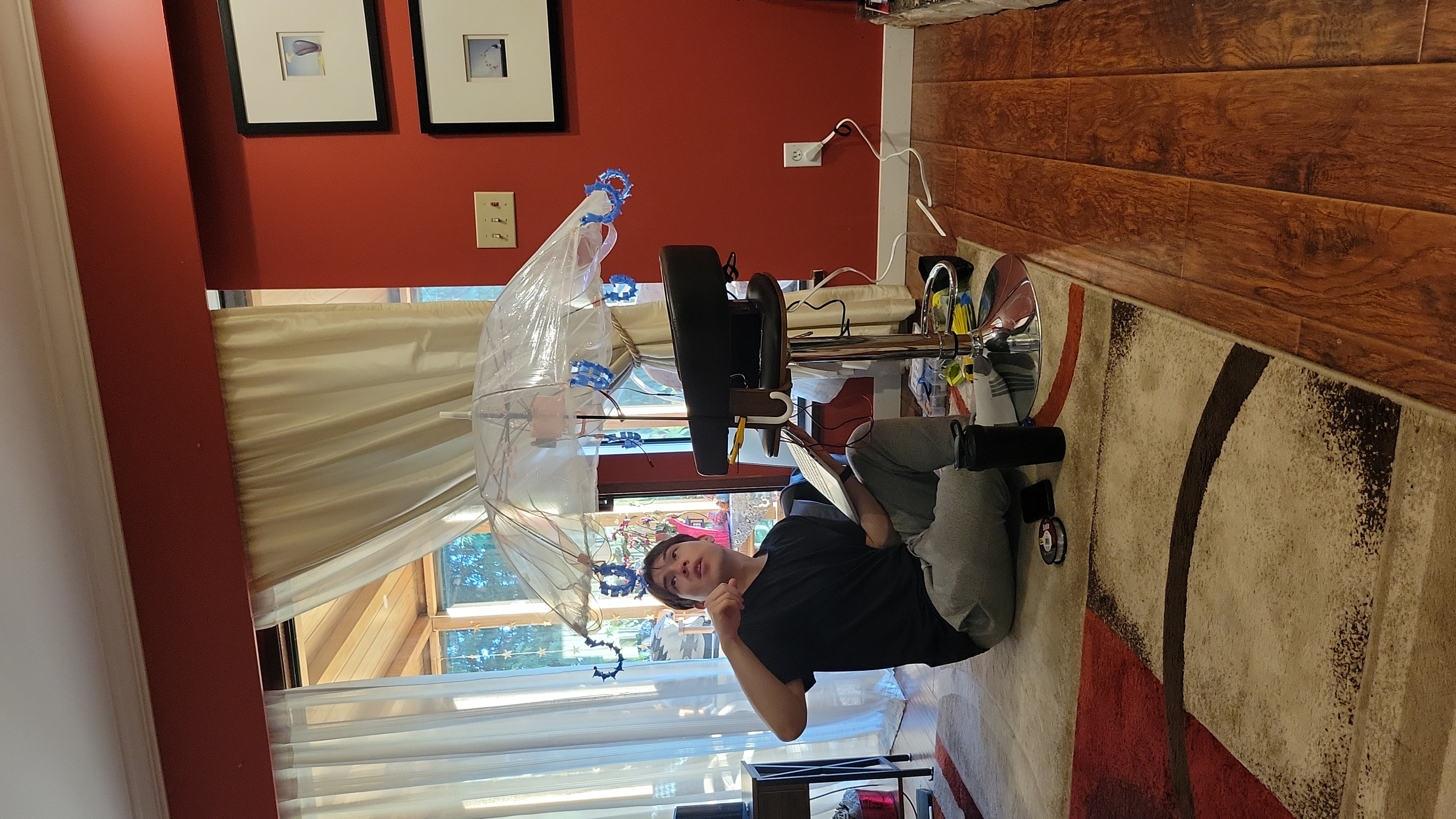
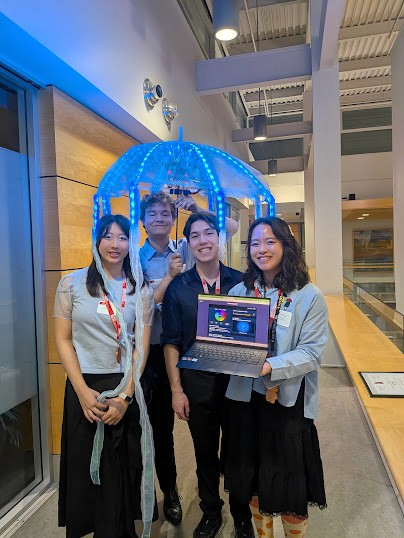
SFU’s annual Faculty of Applied Sciences (FAS) Competition was held in March 2026. The prompt was to create a project that would inspire K-12 students to pursue applied sciences. Our four-person team consisted of Lauren Yip, Chloe Yip, Eric Cosma, and myself. Our project was a Jellyfish Umbrella: converting a standard umbrella into one that visually and mechanically resembles a jellyfish.
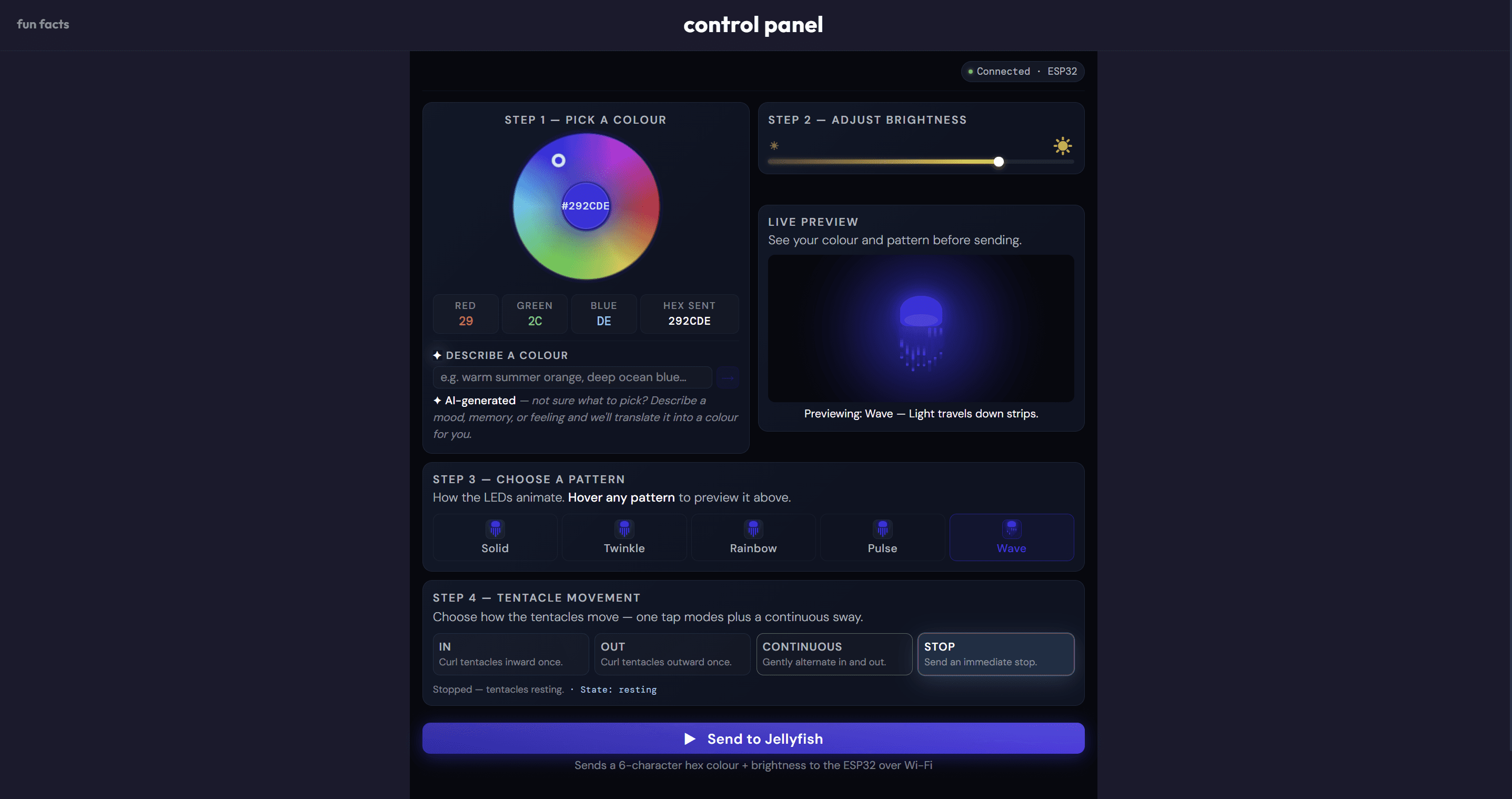
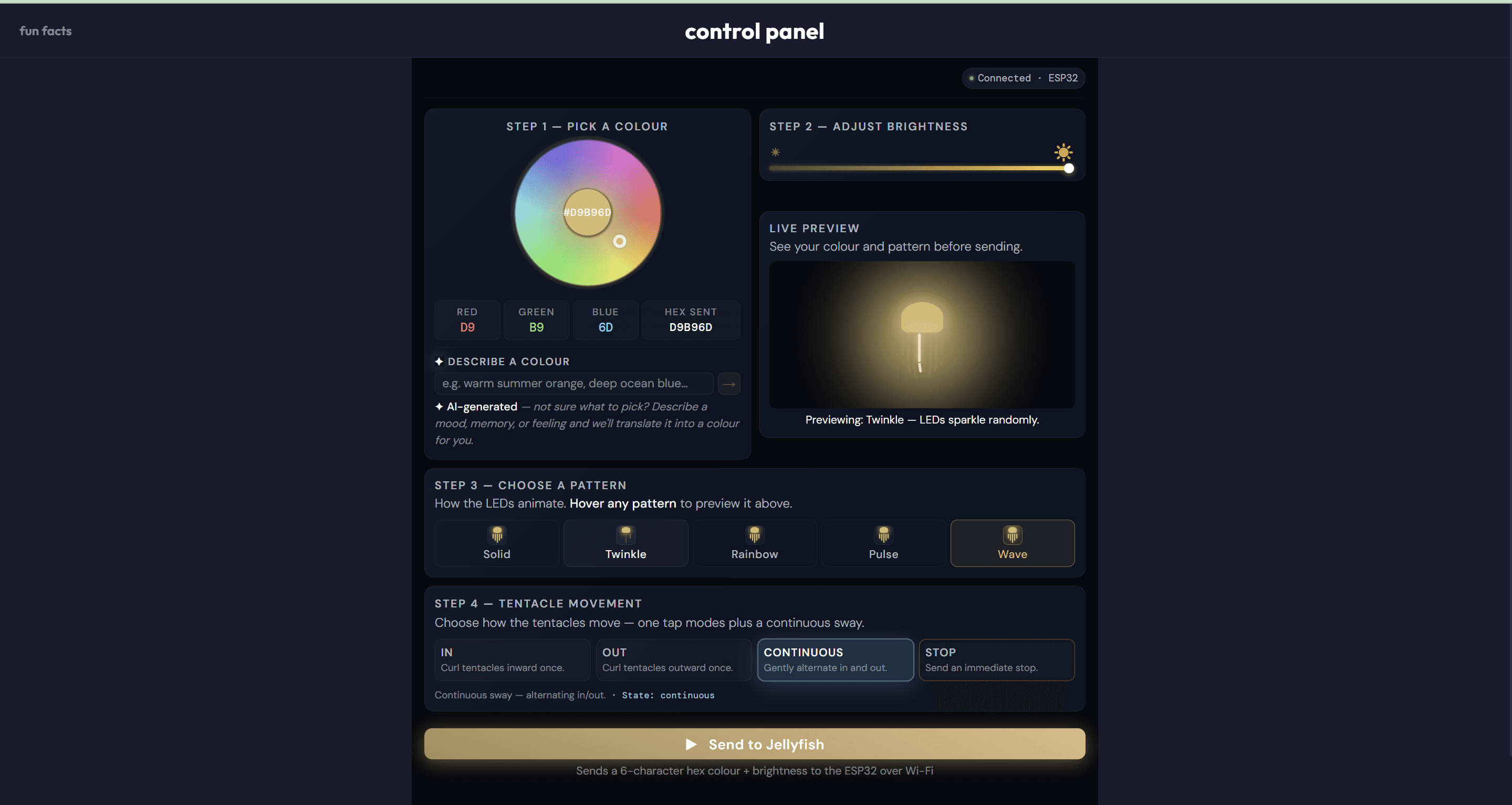
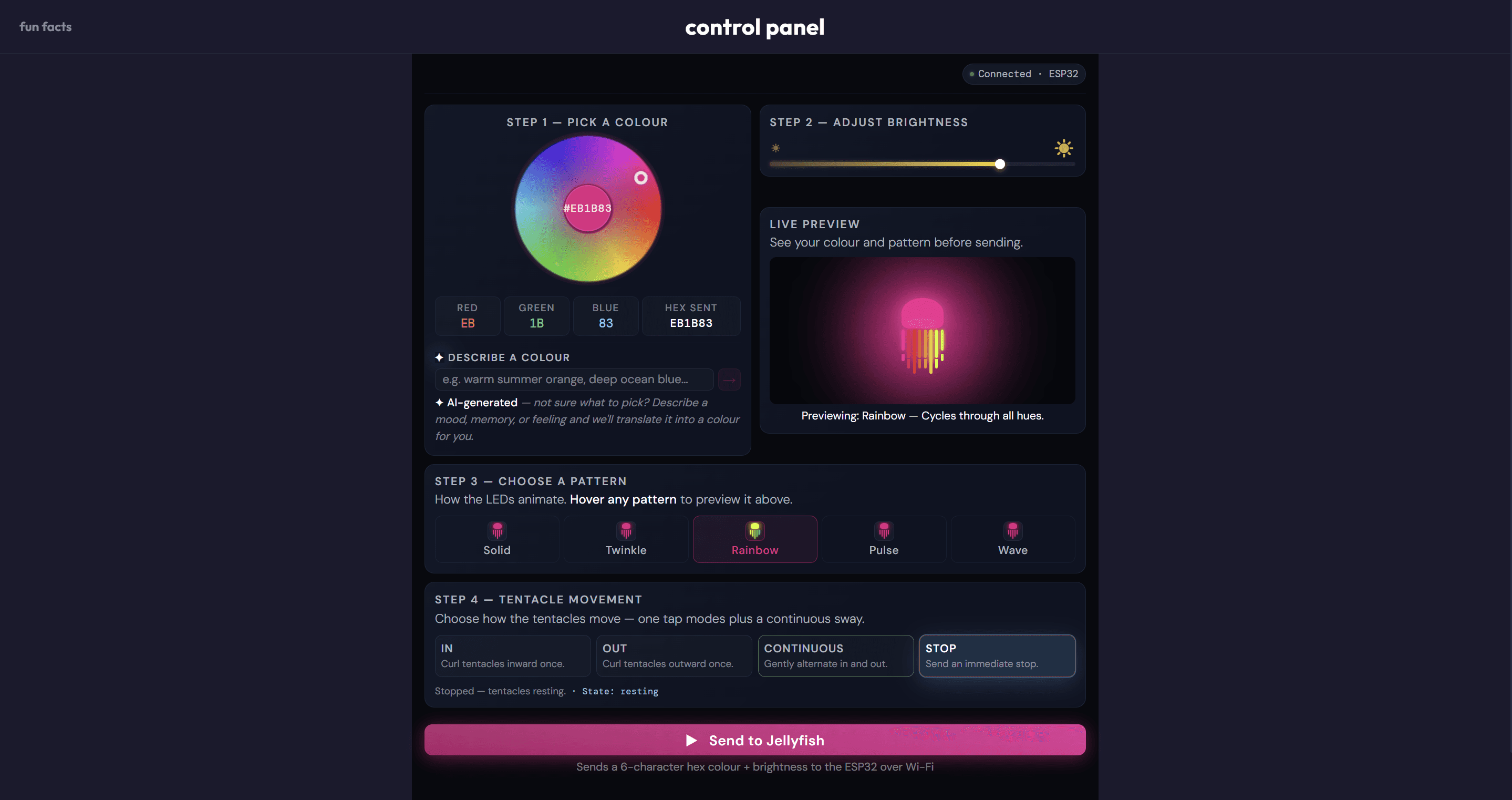
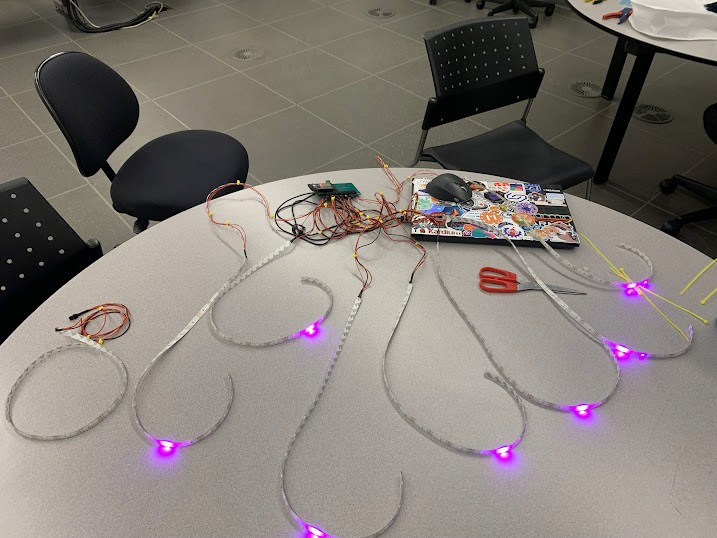
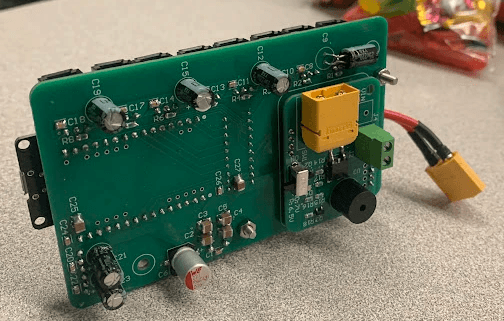
Lauren initially proposed the idea, and the team developed the concept from there. My role focused on the mechanical engineering design of the system. This included designing the electronics housing, the tentacle actuation mechanism, and the segmented tentacle structure itself, while ensuring the entire assembly could still fold and operate like a normal umbrella. Lauren and Chloe developed the web application interface used to control the LED lighting and motors, and also handled much of the visual design and decoration of the project. Eric worked on the electronics system, integrating the LED strips, PCB, power distribution, and control hardware.
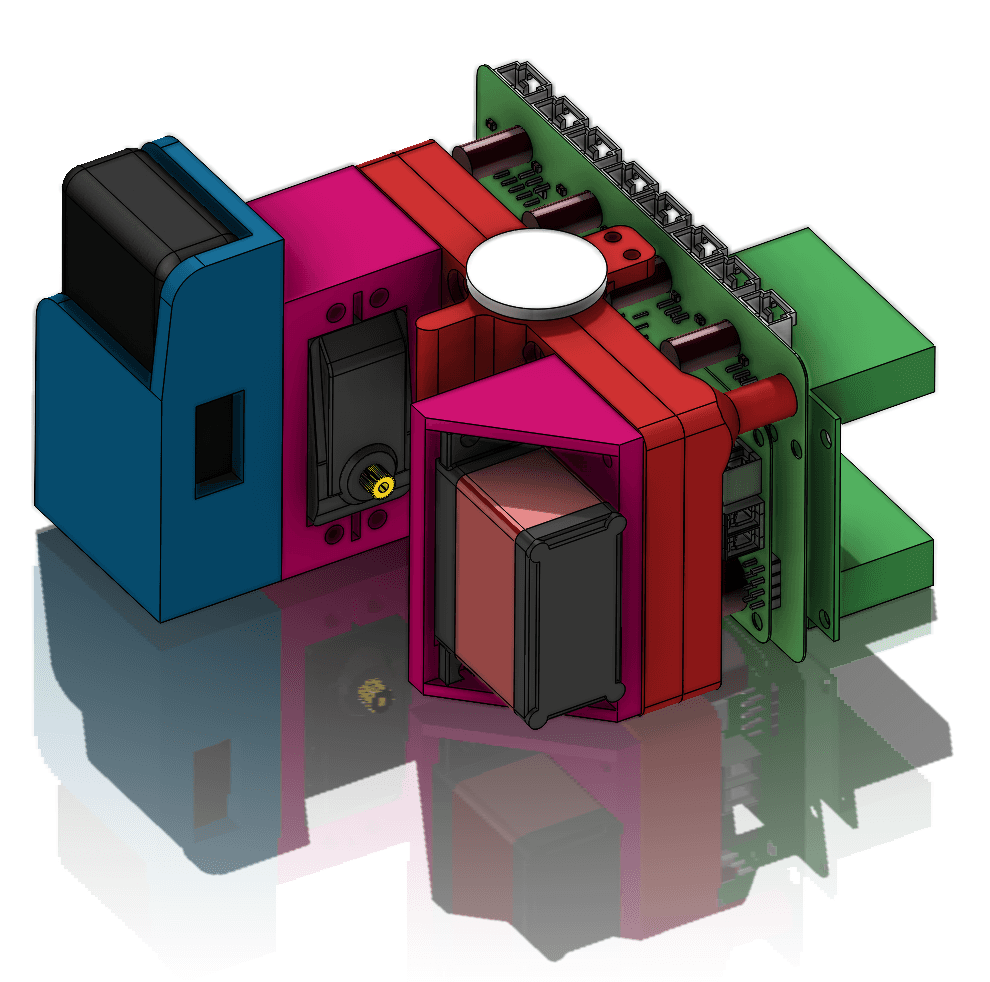
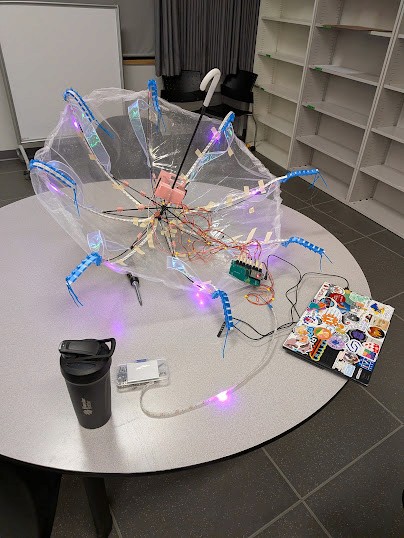
One of my main design objectives was to keep the primary electronics assembly mounted on the moving portion of the umbrella shaft, the section that slides when opening or closing the umbrella. This kept the system compact and unobtrusive when deployed. Another objective was to actuate the eight tentacles using two high-torque servo motors: one motor extending the tentacles outward and another retracting them inward.
The moving assembly required relatively little iteration. My approach used two clamping mounting blocks attached to the umbrella shaft, with the remaining components branching off this structure. On one side were the two 20 kg·cm servo motors and battery, while the other side housed the PCB, buck converter, and ESP32 microcontroller.
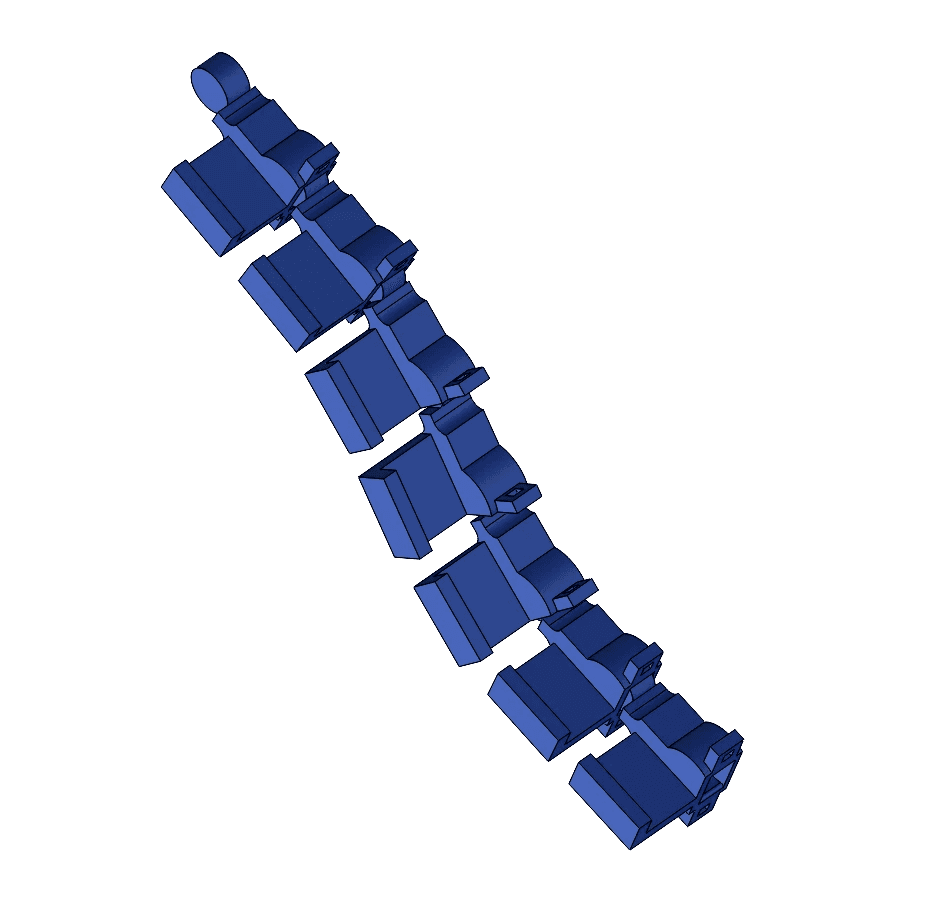
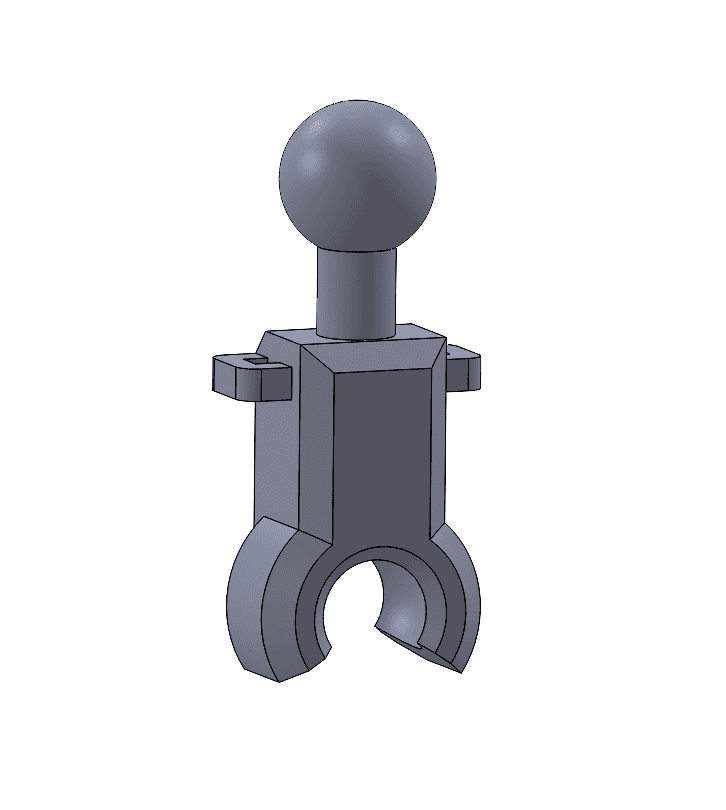
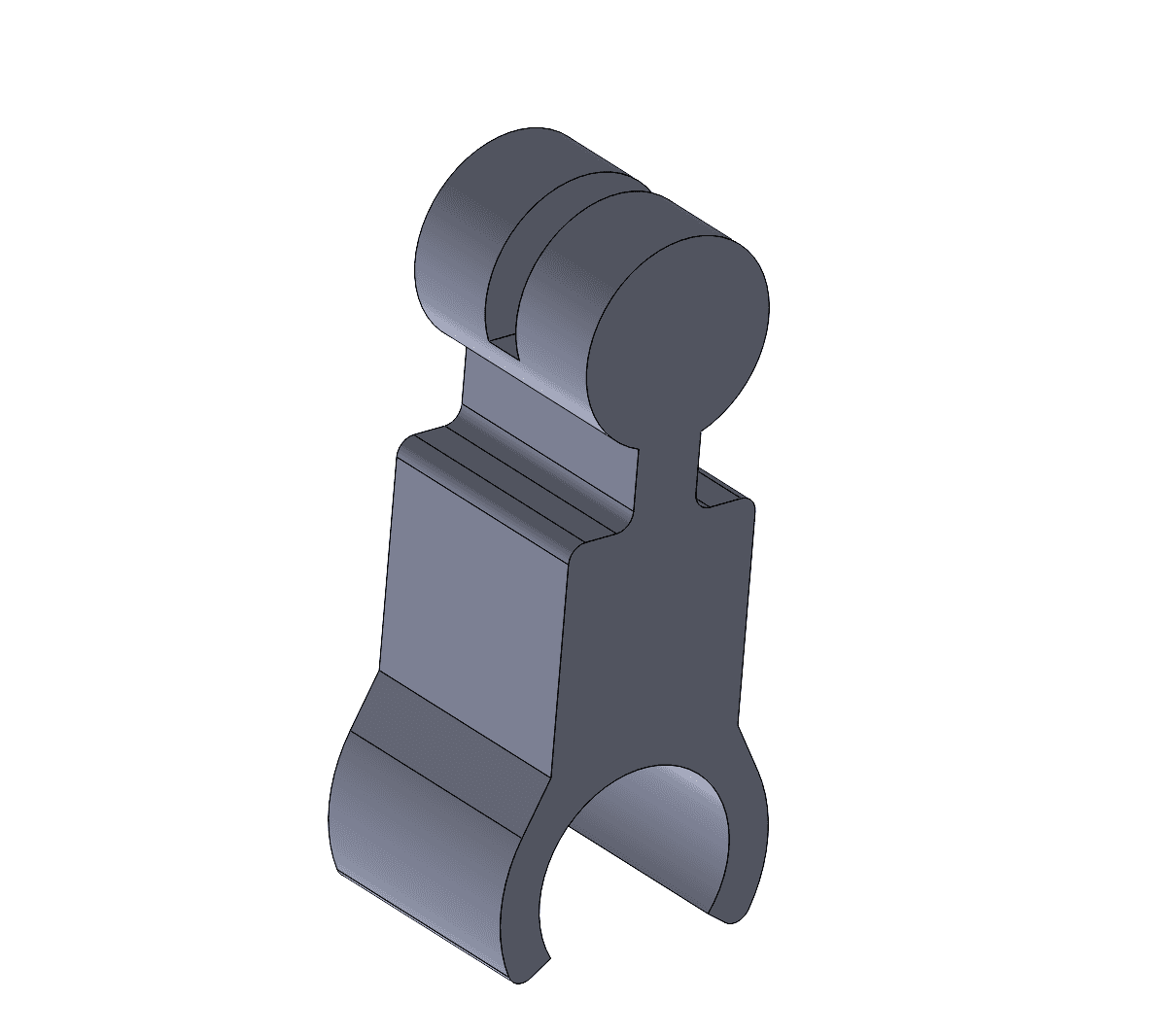
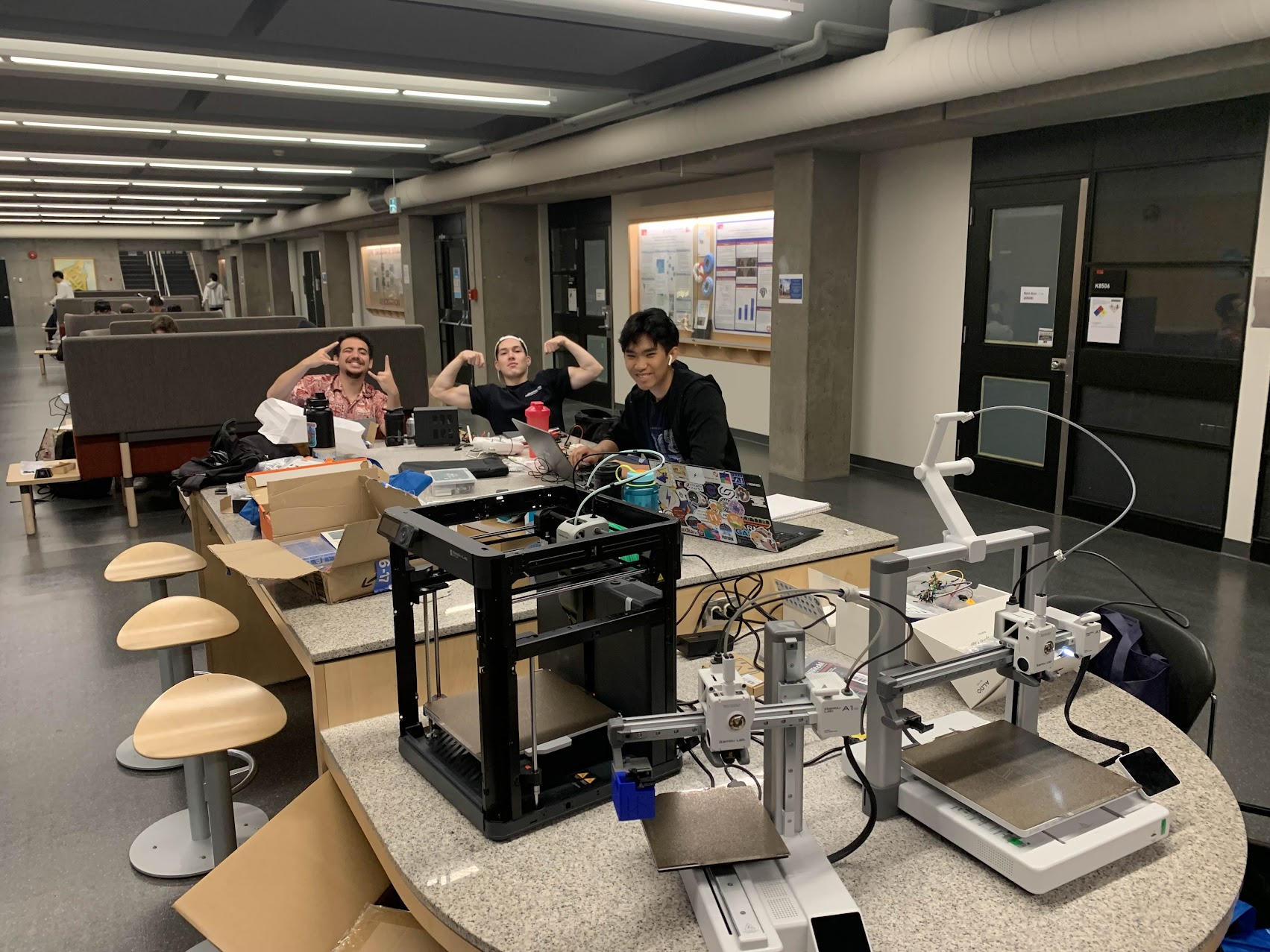
The tentacles themselves went through several design iterations. Earlier versions used longer and bulkier links to maximize motion, but this increased mass and overall size. The final design uses modular segmented links connected by cylindrical pin joints, allowing each tentacle to bend in a single direction like an articulated chain. Each link was designed to snap together, enabling modular extension and easy replacement. One side of each link also includes a cable-management channel that securely holds an LED strip. The tolerances for these parts were determined through prior printing experience using BambuLab P2S, P1P, and P1S printers available within the team.
The most time-consuming part of the project was assembly and tuning of the actuation system. Each tentacle is driven by fishing line routed through square guide holes in the links and attached to the bottom segment. The lines needed to be tied with the correct tension so that the tentacles had zero tension at the neutral position, while still allowing controlled curling in both directions when actuated by the servos. Sewing the fabric onto both the tentacles and the umbrella canopy also required significant manual effort.
Including design, 3D printing, electronics integration, and assembly, we estimate the team spent over 350 hours developing the project.
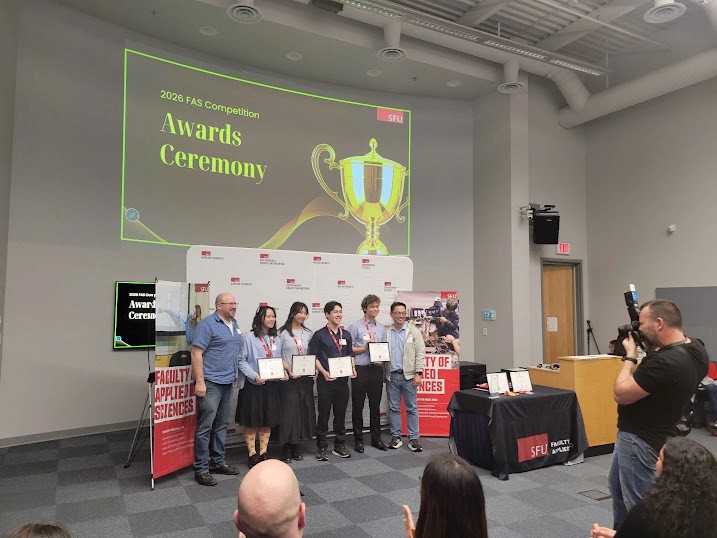
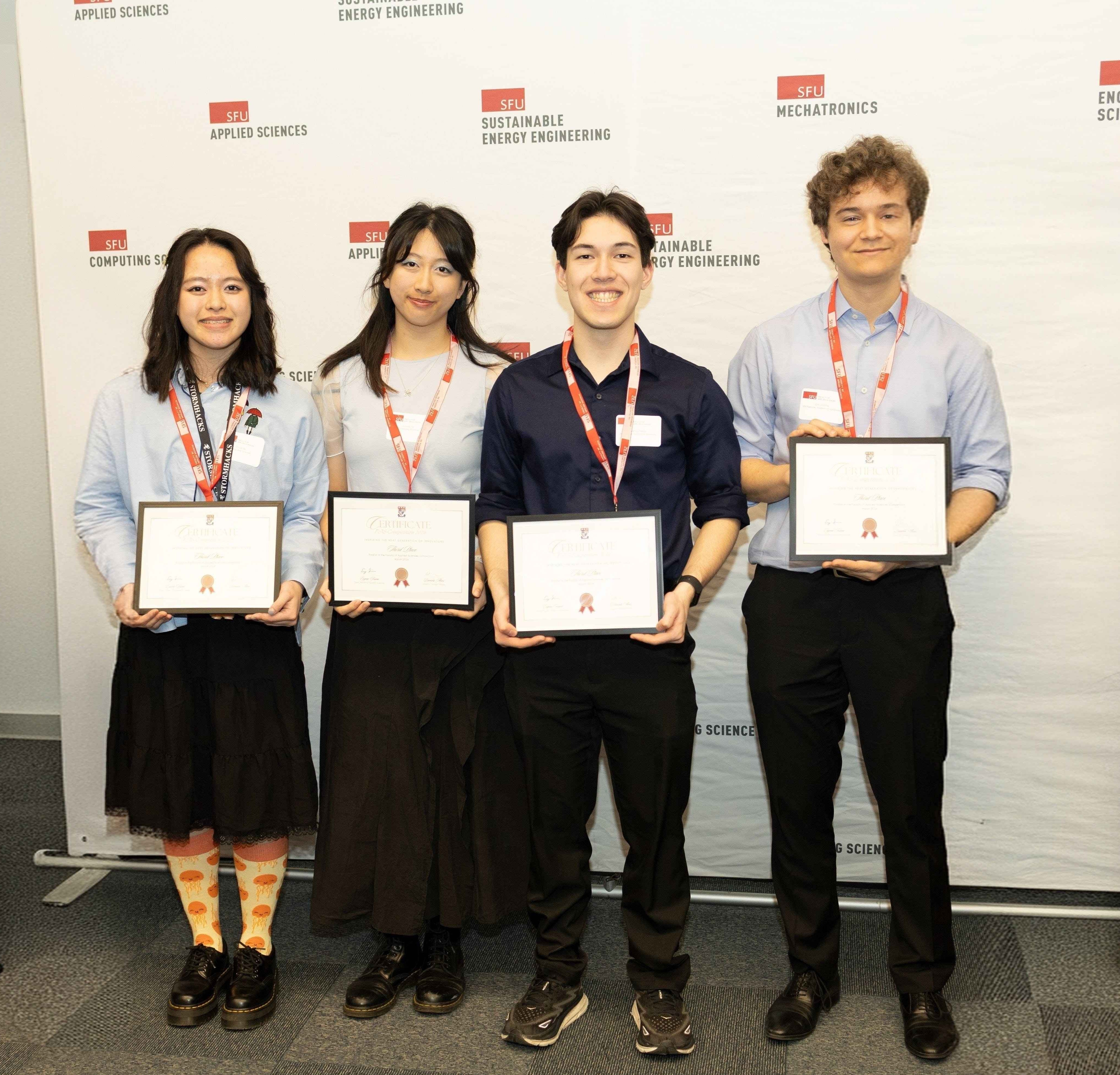
Overall, we ended up placing 3rd in the competition. Being my first FAS Competition attended, I was quite happy with that placement, alongside the winnings that were able to cover the costs of parts. What I enjoy about these engineering competitions/hackathons is that you have a reason to be able to dive deep into a project of your choosing. It's an excuse to have fun doing what you love and making something, anything. I look forward to attending more of these styles of events and engineering more projects to feed my curious mind.
Watch the presentation: https://photos.app.goo.gl/CDj8ubJub9xBh4h4A
More about my teammates:
Chloe: https://www.linkedin.com/in/chloe-yip830/
Lauren: https://www.linkedin.com/in/lauren-yip/
Eric: https://www.linkedin.com/in/ericcosma/
Where I got to know them better (everyone should attend Treehouse!): https://treehouse.place/